
Can You Work in the UK With a South African Commercial Diving Qualification?
If you are considering commercial diving training in South Africa but hope to work in the UK, the first question is whether the qualification will be accepted for the work you want to do. For anyone researching a South African commercial diving qualification UK recognition is an important factor to understand before enrolling. The answer can be yes, but it depends on the exact certificate, the type of diving project and whether your qualification remains current in South Africa. The UK Health and Safety Executive (HSE) publishes a list of approved diving qualifications. Its list dated 1 January 2026 includes specific South African Class II, Class III and Class IV qualifications.
South African Commercial Diving Qualification UK Recognition: What Does HSE Approval Mean?
Under the Diving at Work Regulations 1997, a working diver must hold an approved qualification appropriate to the activities they may be asked to carry out. HSE approves qualifications by class of diving. Its published list names qualifications, rather than endorsing every school that teaches towards them. Therefore, the accurate description is that certain South African qualifications are on the HSE approved list for defined work. Jacks Dive Chest should not be described as an HSE-approved school.
HSE explains that someone who trained overseas cannot simply “cross over” to an HSE qualification. However, a diver with an overseas certificate appearing on the approved list may work under the relevant HSE regime if the certificate is current in the country of issue and suitable for the class of diving. The diving contractor must also decide whether the individual has the competence for the actual task. A listed certificate is a necessary starting point, not a blanket permission for every job.
When comparing training options, UK candidates should check whether the South African commercial diving qualification UK employers require for their intended type of work appears on the current HSE approved qualifications list.
Which South African qualifications appear on the 2026 list?
Class IV commercial SCUBA air diver
For inland and inshore diving, HSE lists South African Class IV SCUBA Air Diver for SCUBA work to 30 metres. This is a commercial SCUBA qualification, not the same thing as a recreational open-water card. Jacks Dive Chest describes its Class IV Commercial Scuba Air course as its initial commercial diving course, covering open-circuit operations for inland and inshore work to 30 metres of seawater. If your intended work will use surface-supplied equipment, Class IV alone is not the appropriate route.
Class III surface-supplied air diver
HSE lists South African Class III Surface-Supplied Air Diver for inland and inshore SCUBA and surface-supplied work to 30 metres. Surface-supplied diving uses an umbilical to provide breathing gas from the surface. Jacks Dive Chest describes its Class III Surface Supply Air course as training for inland and inshore surface-supplied operations to 30 metres of seawater. The certificate and the proposed work must still match in technique, depth and any restrictions.
Class II surface-suppled air diver
For offshore surface-supplied, surface-orientated diving to a maximum of 50 metres, the 2026 HSE list includes South African Class II Surface-Supplied Air Diver. Its listing identifies SCUBA, Surface Supplied and Surface Supplied (Top-Up) equivalence. Jacks Dive Chest describes its Class II Surface Supply Air course as covering offshore surface-supplied operations, including open bell, to 50 metres of seawater. Class II is not a closed-bell or saturation-diving qualification: those are separate categories on the HSE list.
What else must a diver have before taking UK work?
First, check the precise title printed on your certificate against the current HSE list. Small differences in course marketing language can matter, so rely on the issued qualification rather than a school brochure. Keep evidence that the qualification remains current under South African requirements. HSE states that non-UK qualifications must be renewed where the issuing authority requires renewal.
Second, plan for medical fitness. HSE says working divers must hold a valid certificate of medical fitness, and its career guidance describes an examination by an HSE Approved Medical Examiner of Divers before UK training or assessment, with medical certification generally renewed annually. A medical obtained for South African course admission should not be assumed to satisfy every UK project requirement; ask the prospective contractor what medical evidence it will accept.
Third, build work-specific competence. HSE explicitly says that a qualification on its list does not prove that every holder can safely perform every task within that class. A contractor may examine your logbook, recent dives, equipment familiarity, emergency procedures and experience with the planned work. Welding, inspection, construction or other trade skills can also matter. HSE’s careers guidance says employers look for both diving ability and the skills needed for the job underwater.
Finally, check your right to work, any employer onboarding requirements and project-specific training separately. Qualification recognition is about diving competence under the relevant regulatory framework; it is not immigration permission or an offer of employment. For a particular offshore or inland job, ask the contractor to confirm the applicable class of diving and the credentials it expects.
How should a UK candidate choose a course in South Africa?
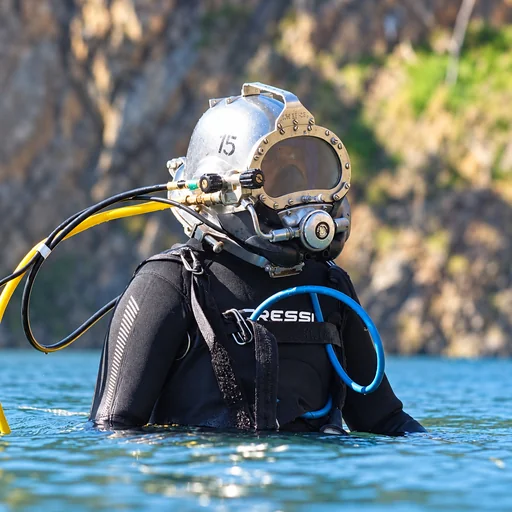
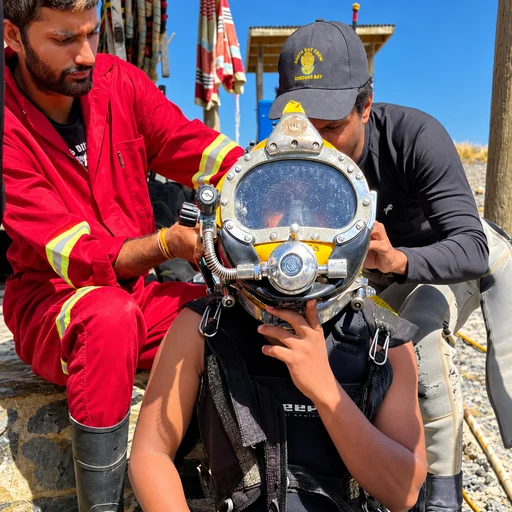
Start with the work you hope to do, not the deepest course name. Someone interested in inland or inshore commercial SCUBA has a different training decision from someone targeting surface-supplied construction work or offshore projects. Match that goal to the qualification named by HSE, then ask the school for the current syllabus, entry requirements, training dates, full costs and details of the certificate issued after successful completion.
Jacks Dive Chest lists Class IV Commercial Scuba Air, Class III Surface Supply Air and Class II Surface Supply Air courses on its course page. Its published entry guidance says applicants must be at least 18, able to swim, use English and basic maths, and obtain a diving medical from a doctor registered with South Africa’s Department of Employment and Labour. Prospective UK students should confirm current admission requirements directly with the academy, and arrange any UK medical or employment checks separately.
Take the next step
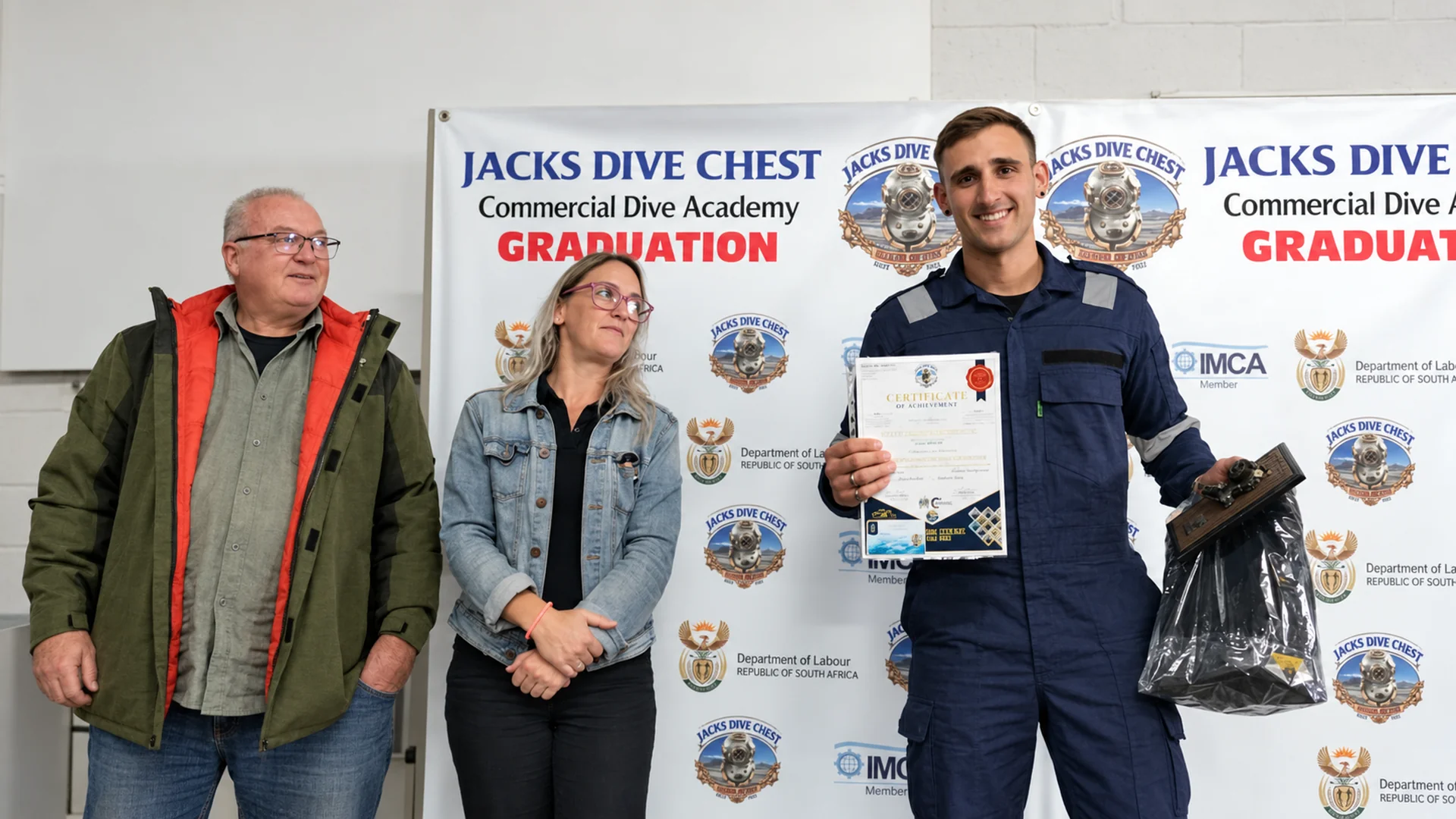
If your goal is UK commercial diving work, compare the current HSE list with the qualification you want to earn. Then speak with Jacks Dive Chest about the Class IV, III or II pathway that fits your intended diving sector. Ask for the latest course information and a clear explanation of the certificate issued on successful completion.