
Can You Work in the US With a South African Commercial Diving Qualification?
If you are based in the United States and considering commercial diving training in South Africa, it is reasonable to ask whether the resulting qualification can be used for work back home. There is no one-word answer. US workplace rules, an employer’s assessment and industry certification are related, but they are not identical. A South African certificate may be useful evidence of training; it does not automatically become an American commercial diver card or guarantee that a contractor will hire you.
Jacks Dive Chest teaches South African Class IV Commercial Scuba Air, Class III Surface Supply Air and Class II Surface Supply Air courses. These are distinct diving modes and levels. Before booking any overseas course, identify the kind of US job you want and confirm what evidence the employer or certifying body will require. This guide explains the questions to ask.
What does OSHA require of a US commercial dive team?
The Occupational Safety and Health Administration (OSHA) regulates commercial diving operations through 29 CFR Part 1910, Subpart T, with related provisions for construction and maritime work. Its dive-team qualification rule says each member must have the experience or training needed to perform assigned tasks safely. That includes relevant tools and equipment, the assigned diving mode, and diving operations and emergency procedures. It also calls for first-aid and CPR training, plus diving-related physics and physiology for team members exposed to or controlling hyperbaric exposure.
This is a work-specific standard. A contractor must look at whether a person is prepared for the actual assignment, rather than relying on a course title alone. State-plan rules or project requirements may also apply. OSHA’s rule should not be described as an approval of Jacks Dive Chest, and completion of a South African course should not be described as automatic permission to perform every kind of commercial dive in the US.
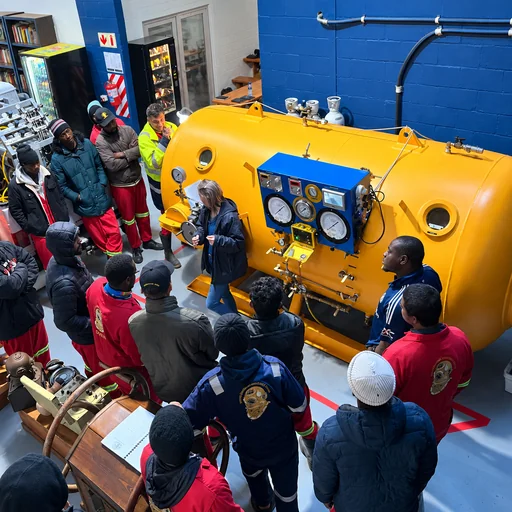
How is an ADCI card different from a school qualification?
The Association of Diving Contractors International (ADCI) runs an industry certification-card programme. Its categories include entry-level tender/diver, air diver, mixed-gas diver and other roles. ADCI explains that a school diploma records formal training, while practical competence develops through supervised work and demonstrated experience. An ADCI card is therefore a separate credential; a training provider cannot promise that its own graduation certificate is the same thing.
For a new entry-level card applicant, ADCI currently specifies at least 625 documented hours of formal instruction under ANSI/ACDE-01-2015 or a recognised equivalent, covering the required subjects. That 625-hour threshold is an ADCI card requirement, not a universal number printed in OSHA’s dive-team rule. ADCI says applicants need verifiable records. Its published standards also say some overseas training certificates may be evaluated with supporting documents such as dive logs; acceptance is an individual assessment, not an automatic conversion.
There is another important distinction for ambitious new divers: ADCI’s Air Diver classification requires field experience and working surface-supplied dives beyond entry-level training. Finishing a Class II course does not by itself establish that someone has completed ADCI’s field-day and working-dive requirements. Ask about the entry-level route first, then learn how a contractor documents progression on the job.
Where do Jacks Dive Chest courses fit?
Class IV commercial SCUBA air
Jacks Dive Chest describes Class IV as its initial commercial course for open-circuit SCUBA in inland and inshore work to 30 metres of seawater. This is commercial training, not merely a recreational scuba card. However, a US job using surface-supplied equipment requires relevant experience or training in that diving mode. A Class IV course alone should not be marketed as a complete route to every US commercial diving position.
Class III surface-supplied air
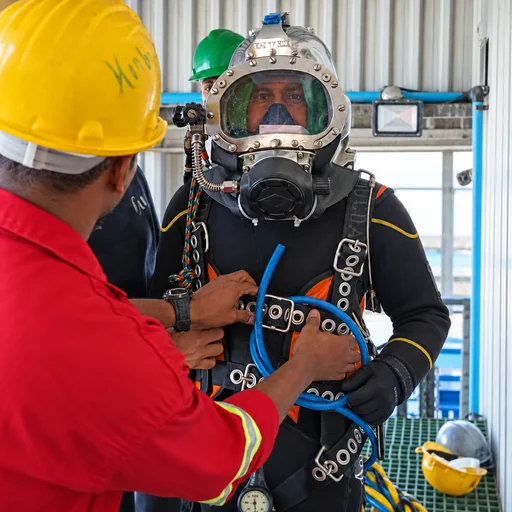
The academy describes Class III as surface-supplied air training for inland and inshore operations to 30 metres. Surface-supplied divers receive breathing gas through an umbilical from the surface. This training is more directly relevant to US work involving that equipment, although the employer must still evaluate the diver’s documented skills, recency and suitability for the task.
Class II surface-supplied air
Jacks Dive Chest describes Class II as covering offshore surface-supplied operations, including open bell, to 50 metres. That course focus may interest a student aiming for offshore work, but US employer acceptance and ADCI card eligibility still require separate checks. An open-bell or surface-supplied qualification must not be described as a closed-bell or saturation-diving qualification.
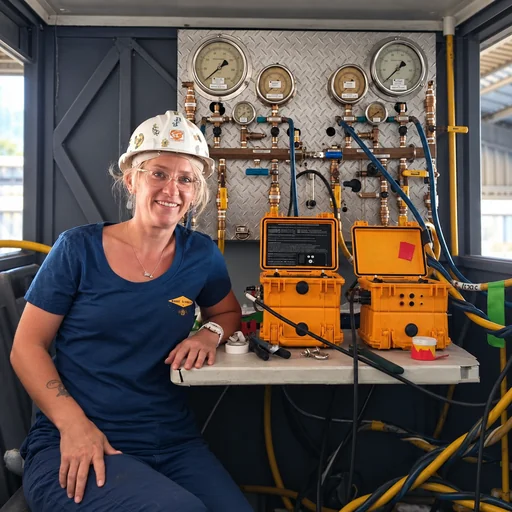
What should an American applicant verify before enrolling?
Ask Jacks Dive Chest for the exact certificate awarded on successful completion of each course, the complete syllabus and a record of documented instruction hours. Request the breakdown of classroom and practical training, diving modes, depth and bottom-time requirements, assessment records and the logbook format graduates receive. The academy’s course page summarises the three courses, but these detailed records are what a US certifying body or contractor may need to review.
Next, ask ADCI directly how it would evaluate the specific certificate and supporting records for the card level you intend to seek. The answer should come from ADCI; neither a website article nor a school’s general statement can issue that decision. Also speak to the US contractors you hope to approach. Ask what entry-level roles they offer, whether they consider overseas training and which additional medical, safety or task-specific requirements they use.
Finally, confirm practical travel details with the academy: admission requirements, a suitable diving medical, course dates, total fees and what is included. Jacks Dive Chest currently lists a minimum age of 18, swimming ability, English, basic maths and a South African diving medical requirement. Plan separately for any US employment, medical or project requirements. Keep copies of every certificate, training transcript, dive log and assessment record.

Get the documents before you decide
If South African training appeals to you, review Jacks Dive Chest’s Class IV, III and II course descriptions and contact the academy for current course and certificate documents. Use those documents when speaking with ADCI and prospective US contractors. A clear answer before enrolment is more valuable than an unsupported promise of automatic recognition.